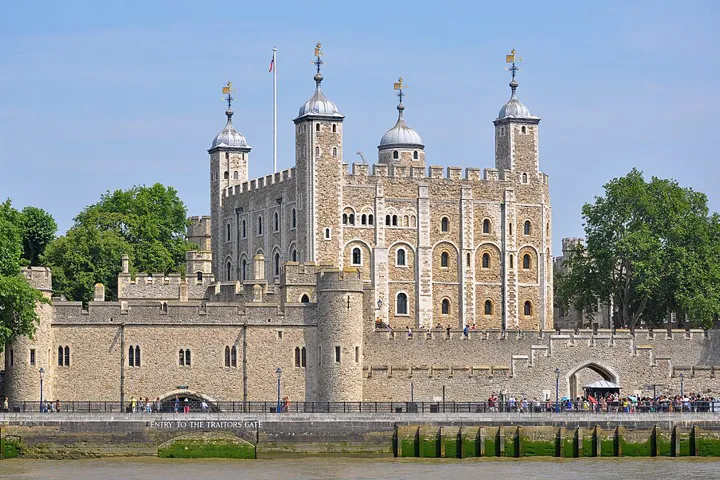
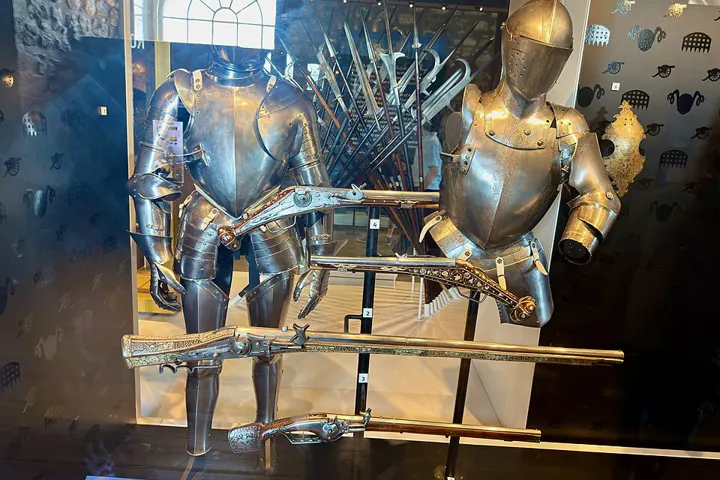
William the Conqueror had the White Tower built after 1066 to control London. Over the centuries the fortress served as a royal residence, prison and place of execution. Tours by the Yeoman Warders are included in the admission and told with great verve. If you have time, look out for the ravens: legend has it that the kingdom will fall if they leave the fortress.
The Tower of London, officially His Majesty's Royal Palace and Fortress of the Tower of London, is a historic citadel and castle on the north bank of the River Thames in London, England. It lies within the London Borough of Tower Hamlets, which is separated from the eastern edge of the square mile of the City of London by the open space known as Tower Hill. It was founded toward the end of 1066 as part of the Norman Conquest. The White Tower, which gives the castle its name, was built by William the Conqueror in 1078 and was initially a resented symbol of oppression. A grand palace early in its history, it served as a royal residence. The Tower is a complex of several buildings set within two concentric rings of defensive walls and a moat. There were several phases of expansion, mainly under kings Richard I, Henry III, and Edward I in the 12th and 13th centuries.
The Tower of London was besieged several times, and controlling it has been important to controlling the country.
On a computer: scan the QR code with the iPhone camera, Traceflap takes the places into the trip guide. No account, nothing is stored, everything is in the link.
May we load partner offers from Travelpayouts and Stay22? The script turns links to travel providers into partner links, shows previews and sets cookies. Privacy